
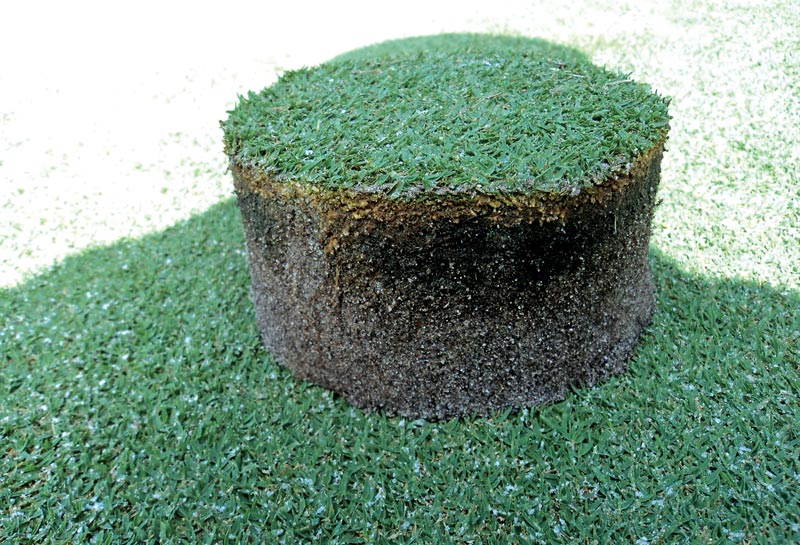
Black layer is one of the most frustrating issues a superintendent can face. It shows up as a dark, greasy, foul-smelling band in the rootzone and it can weaken turf, soften greens, and disrupt playability fast. When black layer appears, it signals that the soil environment has slipped into oxygen-poor conditions that turf cannot tolerate for long.
This post walks through what causes black layer on golf greens, how to spot early warning signs, and where irrigation water quality, especially bicarbonates and high pH, fits into the picture.
Black layer is an anaerobic, or oxygen-poor, zone that usually forms a few centimetres below the surface, most often on sand-based greens.
Typical signs when you pull a core include:
Supers often say the turf looks fine until it does not. Once black layer settles in, recovery moves slowly and can feel unpredictable.
As the turf team at Penn State’s Turfgrass Pest Diagnostic Lab describes it, black layer is “a symptom associated with anaerobic conditions in the soil” and it shows up most often in sand-based putting greens.
At its core, black layer shows that the rootzone ran short on oxygen. Several things usually stack up at the same time.
Low spots, flat grades, tired internal drainage, and soil layering in the upper profile keep water sitting in the same band. Over time, the top few inches pick up fine material and organic matter. That zone holds more water, stays saturated longer, and restricts gas exchange.
When that layer stays wet, oxygen cannot move in fast enough, and the redox potential drops into a range where anaerobic microbes thrive.
Greens that stay wet and carry steady traffic compact quickly, especially around walk-on and clean-off areas. Traffic closes pore space, squeezes air out of the profile, and traps water in the same zone. That combination is a perfect setup for black layer at the edges and low run-off areas.
Thatch and organic accumulation in the top several centimeters act like a sponge. They hold water and slow vertical movement through the profile. Algae and surface biofilms add another seal at the surface, which keeps the mix wetter and further limits gas exchange.
This part often flies under the radar.
Irrigation water with high bicarbonates, especially when sodium also runs high, pushes soil structure in the wrong direction over time. Bicarbonates tie up calcium and magnesium, encourage carbonate scale, and increase the risk of surface sealing. Sodium promotes dispersion of fine particles and organic matter. Together they can slow infiltration and keep the upper rootzone wetter for longer after each irrigation cycle.
High pH in the soil solution also makes key nutrients like iron, manganese, and phosphorus harder for turf to access, so stressed, shallow-rooted turf sits on top of a profile that already struggles to move water and air.
This risk climbs on courses that depend on recycled water or high-alkalinity wells. USGA guidance on recycled water notes that many supplies carry “increased levels of soluble salts, sodium, bicarbonates, and heavy metals” that demand extra management to protect soil structure and infiltration.
When chronic wetness, compaction, organic buildup, and poor infiltration line up, the rootzone shifts into anaerobic conditions. Sulfate-reducing bacteria convert sulfur and sulfate into hydrogen sulfide gas. That gas produces the sulfur smell and reacts with iron and other metals to form black metal sulfides, which create the dark band we see as black layer.
Superintendents who irrigate with high-alkalinity water often inject an acid into the system. Common choices include sulfuric or blended N-furic products. This practice lowers pH, neutralizes bicarbonates, and can improve infiltration and overall turf performance when a water test shows a bicarbonate and sodium problem.
The catch is simple. Acidified water still runs through the same sand profile. If construction issues, drainage limits, layering, organic buildup, and compaction stay in place, the rootzone can slip back into oxygen-poor conditions even though the water test looks better.
Sulfuric-based systems handle the chemistry side well. It lowers pH and neutralizes bicarbonates in the water, and they can help maintain infiltration when they are managed with good leaching and calcium in the system.
They also bring some baggage:
Sulfuric acid does not cause black layer on its own. It does nothing to improve oxygen movement in the soil, though, and in some situations, the extra sulfate load and salt burden can sit in the same direction as other factors that keep the profile wet.
Carbonic acid forms when CO2 dissolves into water under pressure. From a water-treatment standpoint, it aims at the same basic goal as sulfuric injection. It lowers pH, neutralizes bicarbonates, and helps keep calcium and magnesium in solution instead of dropping out as carbonate scale.
The key differences sit around what it leaves behind and how it behaves in the soil.
Peer-reviewed turf research on CO2 irrigation and black layer still sits in the emerging category. The chemistry is straightforward, though, and it lines up with what superintendents see when they combine CO2-based pH control with sound drainage, venting, and topdressing programs.
Systems like ECO2MIX apply this approach at the pump station, so water reaches the course with a corrected pH, lower bicarbonate load, and no added sulfate.
Preventing black layer means protecting oxygen in the rootzone and managing both the physical profile and the water that runs through it.
Most long-term success stories follow a familiar pattern:
These practices open channels for air, give hydrogen sulfide a path to vent, and keep the soil from sitting saturated for long stretches.
Water quality rides alongside these cultural tools.
If irrigation water brings high bicarbonates, sodium, or both every time the pump turns on, the surface never gets a full reset. The profile stays tighter and wetter than it should, and cultural programs fight an uphill battle.
Acidifying the water to control pH and neutralize bicarbonates belongs near the top of the long-term plan in those situations. Superintendents have a few options, including mineral acids and CO2/carbonic acid systems. Both can correct the water on paper. Carbonic acid does it without the sulfate loading and safety issues that come with bulk sulfuric acid.
On reclaimed and high-alkalinity sources, that difference matters. Long-term black layer control depends on both oxygen and chemistry. The water side is one of the few levers a superintendent can move every single day.
Black layer forms when the rootzone becomes oxygen poor. Common drivers include chronic wetness, poor internal or surface drainage, soil layering, compaction from traffic, excess organic matter, and, in many regions, irrigation water with high bicarbonates and sodium. These conditions allow sulfate-reducing bacteria to produce hydrogen sulfide gas, which reacts with metals in the soil and turns the layer black.
Prevention starts with keeping the rootzone oxygenated. That means venting and aerifying on a regular schedule, staying on top of sand topdressing and organic matter, fixing drainage bottlenecks, and managing moisture tightly. If water tests show high alkalinity and bicarbonates, acidifying the irrigation water helps keep the profile more open. Carbonic acid systems give you that bicarbonate control without adding sulfate, which can be a benefit on reclaimed or salty sources.
Typical signs include a dark or greasy band in the rootzone, a rotten egg odor when you pull cores, weak or thinning turf over the affected area, and soft or saturated spots that do not firm up even in dry weather. Early detection usually comes from routine soil inspection or sampling instead of waiting for surface decline.
It helps with the water side of the problem. Acid injection with sulfuric or similar products lowers pH and neutralizes bicarbonates in high-alkalinity water, and many courses rely on it for that reason. It does not repair drainage, layering, or compaction, and it does not move more oxygen into the soil by itself. Over time, the extra sulfate and salt load can add stress in profiles that already drain poorly. For chronic black layer, you still need aeration, topdressing, moisture control, and leaching, no matter which acid source you use.
Carbonic acid lowers pH and breaks down bicarbonates in the irrigation water without adding sulfate or chloride. That keeps calcium and magnesium more available, reduces the risk of carbonate sealing, and supports better infiltration when drainage and cultivation are in place. By helping water move more freely and avoiding extra salt loading, it makes it harder for the rootzone to slide into chronic, oxygen-poor conditions that favor black layer.
Water quality rarely acts alone, but it plays a big part on many courses. High bicarbonate and sodium in irrigation water promote surface sealing, weaker structure, and chronic wetness, especially on reclaimed or brackish supplies. When that sits on top of existing drainage or layering issues, the stage is set for anaerobic pockets and black layer.
Yes. Courses that rely on reclaimed water or high-alkalinity wells, such as many in Florida, California, Texas, and the Southwest, report black layer more often. Warm, humid climates, heavy play, and older greens with aging mixes also increase risk because they push the upper rootzone toward chronic wetness and higher organic matter.
If you want to see how water chemistry and carbonic acid fits alongside cultural practices, watch the full ECO2MIX webinar replay.
You will see:


