What to Expect from Carbonic Acid Water pH Control
A lab water test taken after irrigation will show no change from carbonic acid treatment. That is not a failure, it is the chemistry: CO₂ is a gas and leaves the water after irrigation ends. What matters is the pH the plant feeds at during irrigation, not what the lab sees hours later.
Why Won't a Lab Test Show It?
When pressure drops after a run, dissolved CO₂ escapes the same way a carbonated drink goes flat; in pot studies, pH returned to baseline within 40 to 120 minutes. A lab test measures water at rest. Carbonic acid changes water under irrigation pressure, at the point where the plant feeds. The lab result is not wrong, it is measuring the wrong moment.
Sulfuric acid is different only because it leaves a permanent trace: sulfate in every lab test. Carbonic acid delivers the same pH at the wetting front and leaves nothing to find afterward.
Where Does the pH Change Happen?
At the soil solution at the wetting front, the water the root encounters during active uptake. That is where pH decides whether calcium, phosphorus, iron, and manganese are available. The system holds pH 6.5 or lower under pressure through the entire mainline to the last emitter, so when the plant feeds, it feeds from water at the target.
What remains afterward is CO₂ and water. No sulfate, no chloride, nothing that raises EC. For the chemistry, see Carbonic Acid and Bicarbonates.
How Do You Confirm It Is Working?
1. Reactor display. Treated water pH in real time while irrigation runs. If it reads 6.5, that is the pH going to the field.
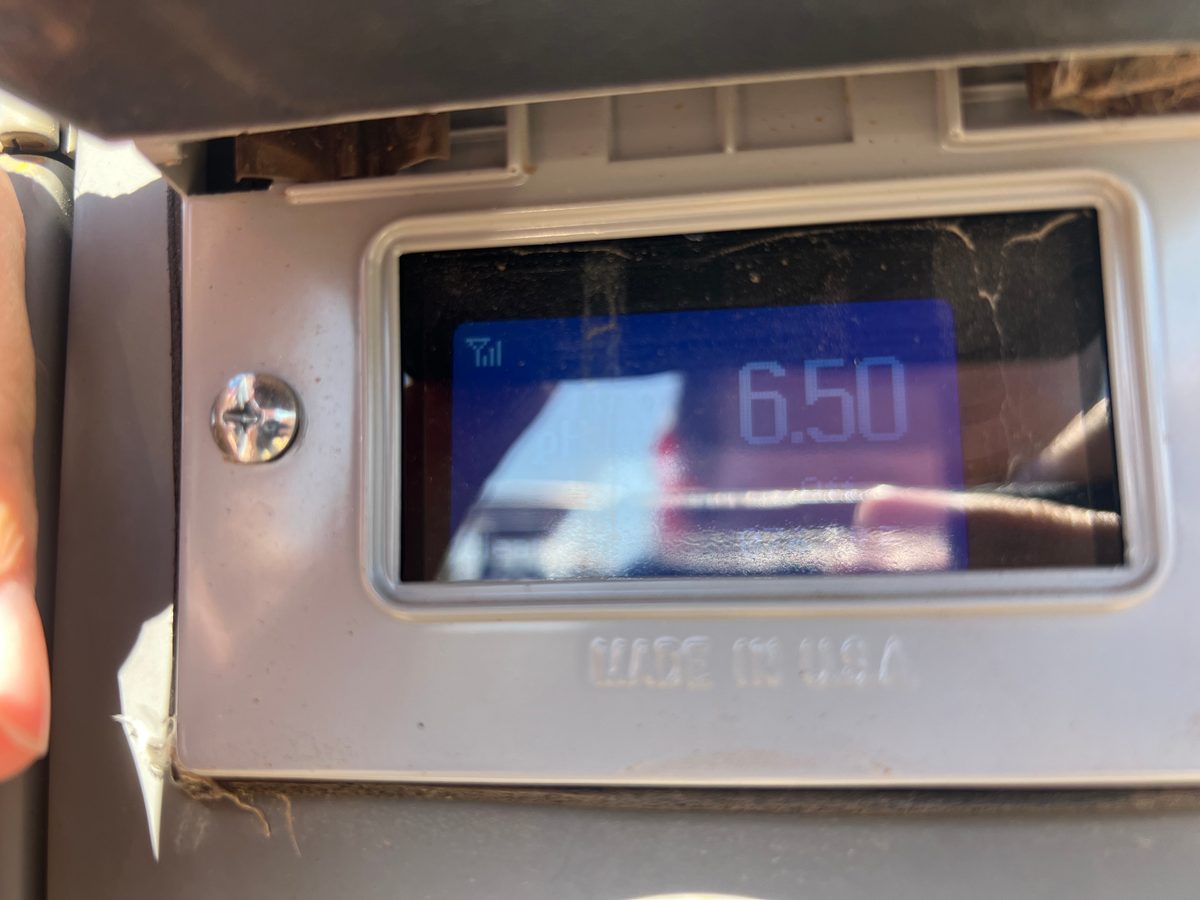
The reactor display holding pH 6.5 during an irrigation event.
2. Cup test at the dripper. Catch water at the furthest emitter during irrigation and measure immediately with a calibrated field meter. Even a few minutes of air exposure lets CO₂ gas off and the reading drifts up; the sampling table below covers lab submissions.
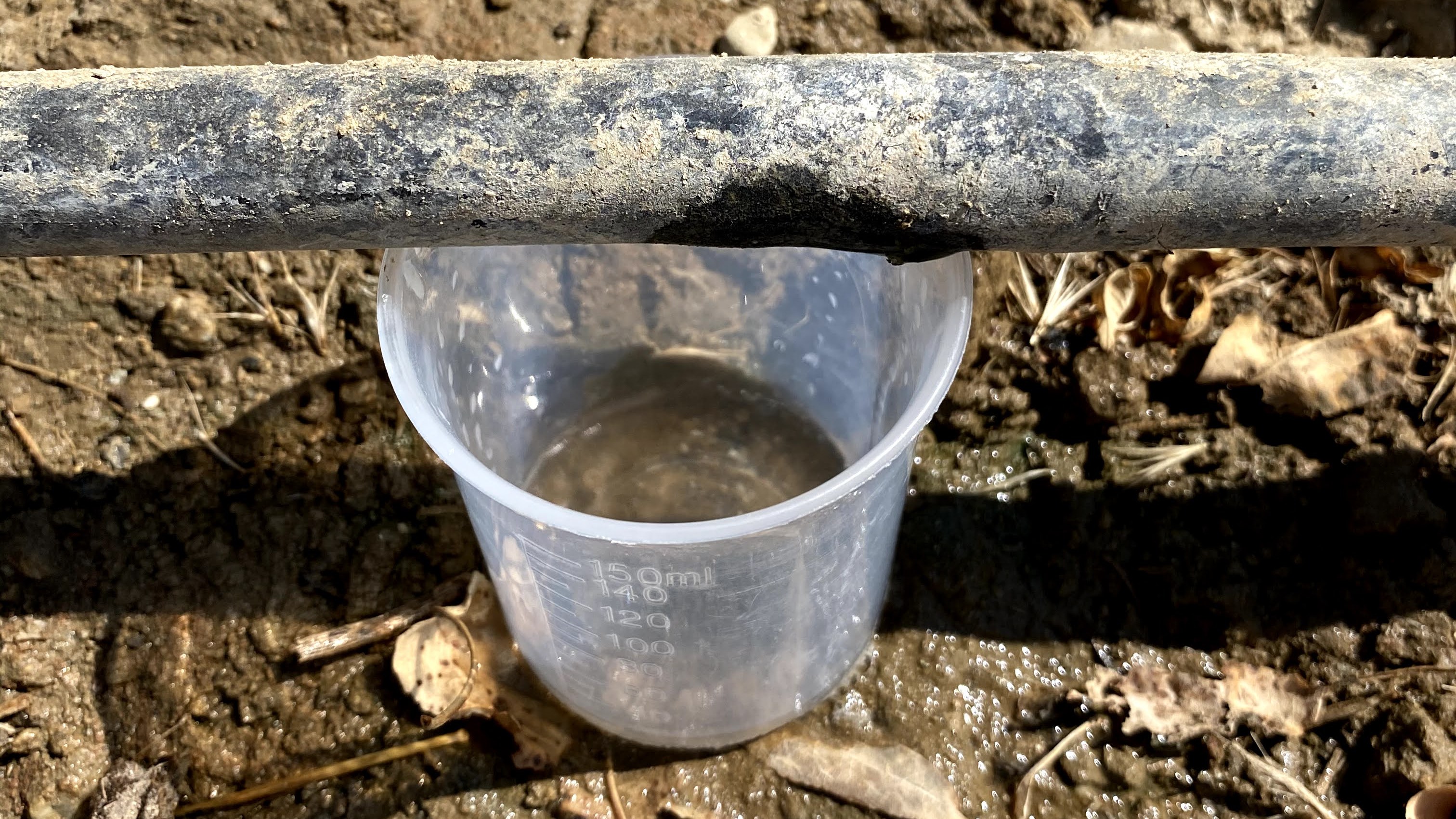
Catch water at the emitter and read it on the spot, before CO₂ gasses off.
3. Soil tests over the season. Baseline before installation, repeat at season's end with Haney, BeCrop, or saturated paste extract. The side-by-side pistachio result on the results page is what that looks like: +69% CO₂ respiration and +124% soil organic matter on the carbonic block while the sulfuric block declined.
What Should You Expect to See?
Agriculture
Better nutrient uptake, less fertilizer for the same growth, better fruit quality over seasons. As soil organic matter rises, many growers also see water savings. Always check your soil and let the data drive your decisions.
Golf & Turf
Color, recovery speed, and fertilizer response. Scale reduction in heads shows up sooner.
Horticulture
Plant response within weeks once root-zone pH holds in the target range.
Field Measurement vs. Lab Measurement
How a sample is handled determines what the pH reading means.
| Condition | What is likely happening | Best practice |
|---|---|---|
| Measured immediately at the emitter or discharge point | Closest representation of actual treated-water pH during irrigation. Dissolved CO₂ is still present at field conditions. | Use a calibrated field meter. Record source pH, treated pH, flow, pressure, and time after system start-up. |
| Collected in a vial with headspace | Dissolved CO₂ moves from the water into the air space. pH rebounds upward as the balance shifts toward bicarbonate. | Fill the container completely, cap tightly, avoid shaking, keep cool, and submit quickly. |
| Delayed sample shipped warm | Greater chance of gas-off, precipitation, and chemical rebalancing before the sample reaches the lab. | Interpret lab pH with caution. Use lab data for alkalinity and mineral content. Rely on field pH for treatment performance. |
| Open bucket or sample cup | Fastest gas exchange with air. pH can change within minutes of collection. | Do not use open containers for representative treated-water pH except for an immediate field meter reading. |
Track each season: source alkalinity, bicarbonate, pH before and after treatment, calcium, magnesium, sodium, and EC, alongside soil and tissue tests. Carbonic acid improves nutrient availability; it does not replace supplying nutrients in the right amounts.
“We're able to see a reduction in inputs that we're having to sell the grower because we're improving the soil. The microbial health improvement is huge.”

Watch: What the Results Look Like
Common Questions
Will I see changes in my water test from the lab?
When will I see results?
Ready to Evaluate Carbonic Acid for Your Operation?
A fully managed service: system, CO₂, calibration, and monitoring included. No upfront equipment cost.