Sustainability
CO₂ that would otherwise be released to the atmosphere controls your water pH, then stores in your soil.
The Best Use for CO2
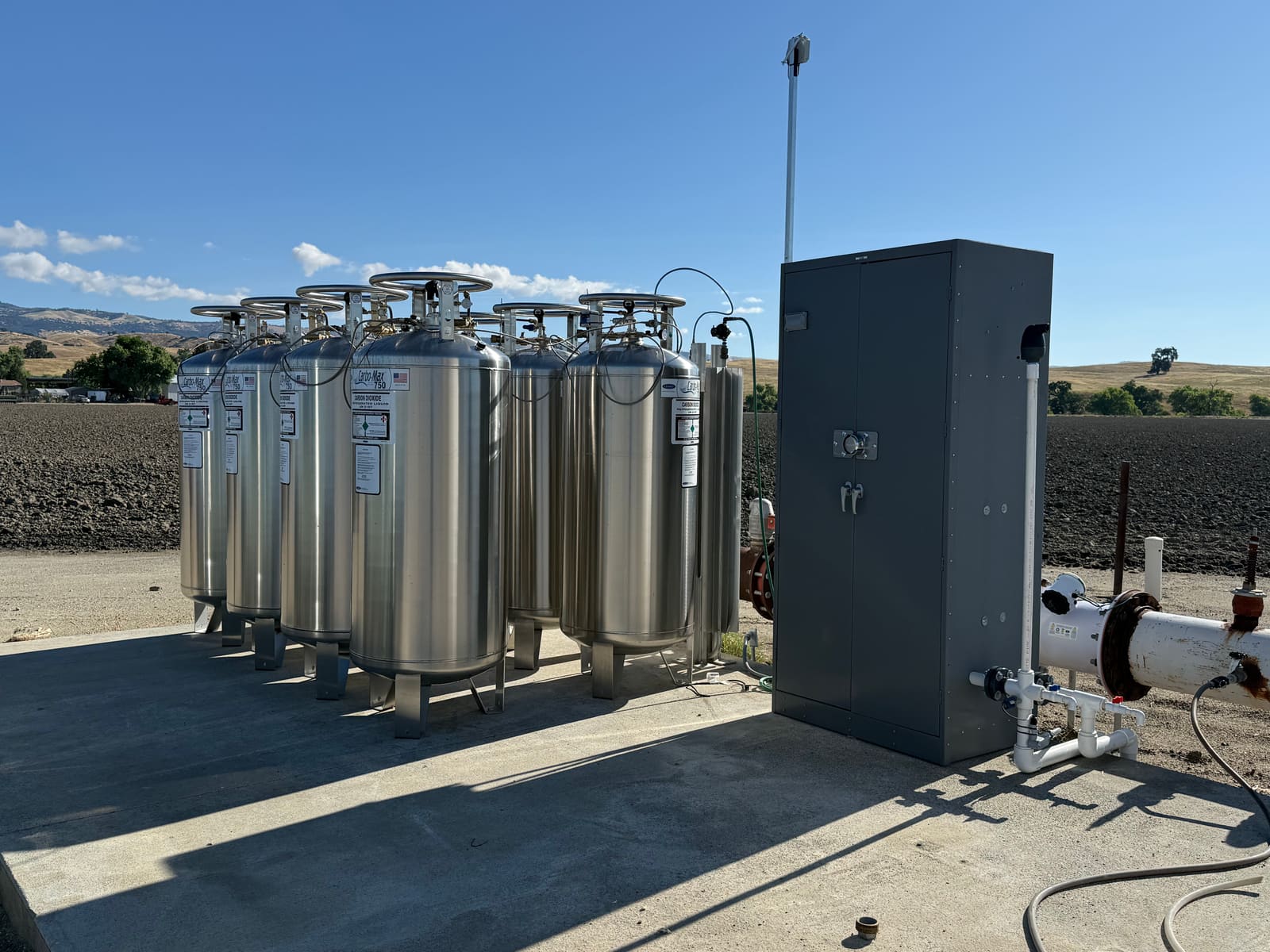
Industrial CO₂ is a byproduct of fermentation, combustion, and manufacturing, and most of it is released to the atmosphere. ECO2MIX captures it and dissolves it into irrigation water, the same reaction that gives rainwater its natural acidity.
One input does two jobs: water pH control in the line, then soil health at the root zone, where the CO₂ feeds microbial activity and is stored as organic carbon.
What Changes When CO2 Replaces Acid?
Sulfate has no biological removal pathway. Every gallon treated with sulfuric acid deposits it in the soil, season after season. Carbonic acid does the same water pH control job and then becomes water and CO₂. Nothing is left behind for the soil to manage.
Two Universities Are Measuring It
Soil Carbon Storage in Pistachios
Carbonic acid vs. sulfuric acid vs. untreated, measuring how much CO₂ from irrigation water stays in the soil. Dr. Sangeeta Bansal, with American Pistachio Growers.
Started 2026. Results will publish here.
Turf Health and Soil Biology on Golf Courses
Carbonic acid vs. untreated on fairways and greens, measuring turf health and soil biology. Dr. Marco Schiavon.
Started 2025. Results will publish here.
Could CO2 Be the Secret Ally Agriculture Needs?
Waldo Moraga's TEDx talk in one line: capture the CO₂ we already vent, put it to work on water pH control, and let the soil keep the carbon.
See What Carbonic Acid Does for Your Operation
Tell us about your water source and crop or turf application. We'll spec a system and explain what to expect.